

Another delightful conversation with Amy Spalding.
A chat about Amy's infinitely charming new romance novel, In Her Spotlight, and the thorough research she did to accurately depict the world of theater.


Hi, friends. Today, a delightful conversation with author Amy Spalding to warm your weary bones. But first, a couple of things:
16 Forever is out in the UK today! If you’ve got any friends across the pond who enjoy Good Books, please let them know!
Also, I’m so moved and honored that Zed Moonstein Makes a Friend made the Oklahoma Library Association’s shortlist for the Children’s Sequoyah Book Award. Students will read books on the list over the next year and then vote for their favorites. Very fun.
Last thing: I’ll be at the North Texas Teen Book Festival in Irving on Saturday, March 7th with so many other amazing authors. Come say hi!
So, you might remember author Amy Spalding from our wonderful 2024 conversation, where we discussed the trials, tribulations, and insecurities of writing On Her Terms, the third book in her Out in Hollywood romance series.
Soon after we did that interview, Amy reached out to say she was writing the fourth book in the series, which took place in the world of theater, and could she pick my brain as part of her research. So we had a really fun conversation about my experiences as a theater actor and writer, including the nuances of the dynamics of a rehearsal room.
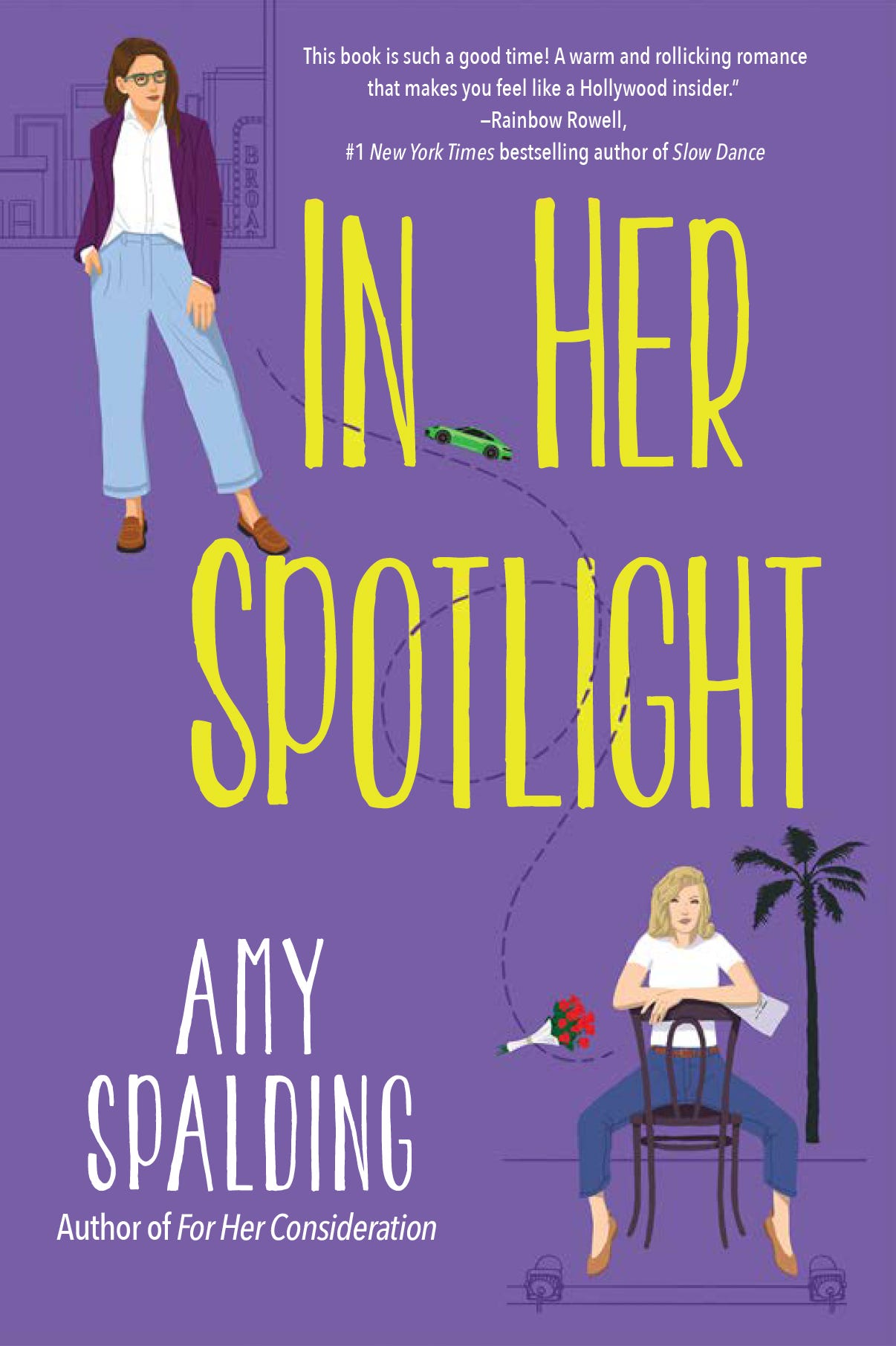
Now, a year and many months later, that book, In Her Spotlight, is being released this week! I read an advance copy, and it’s just fantastic. So charming, so funny, and such a pleasure to read.
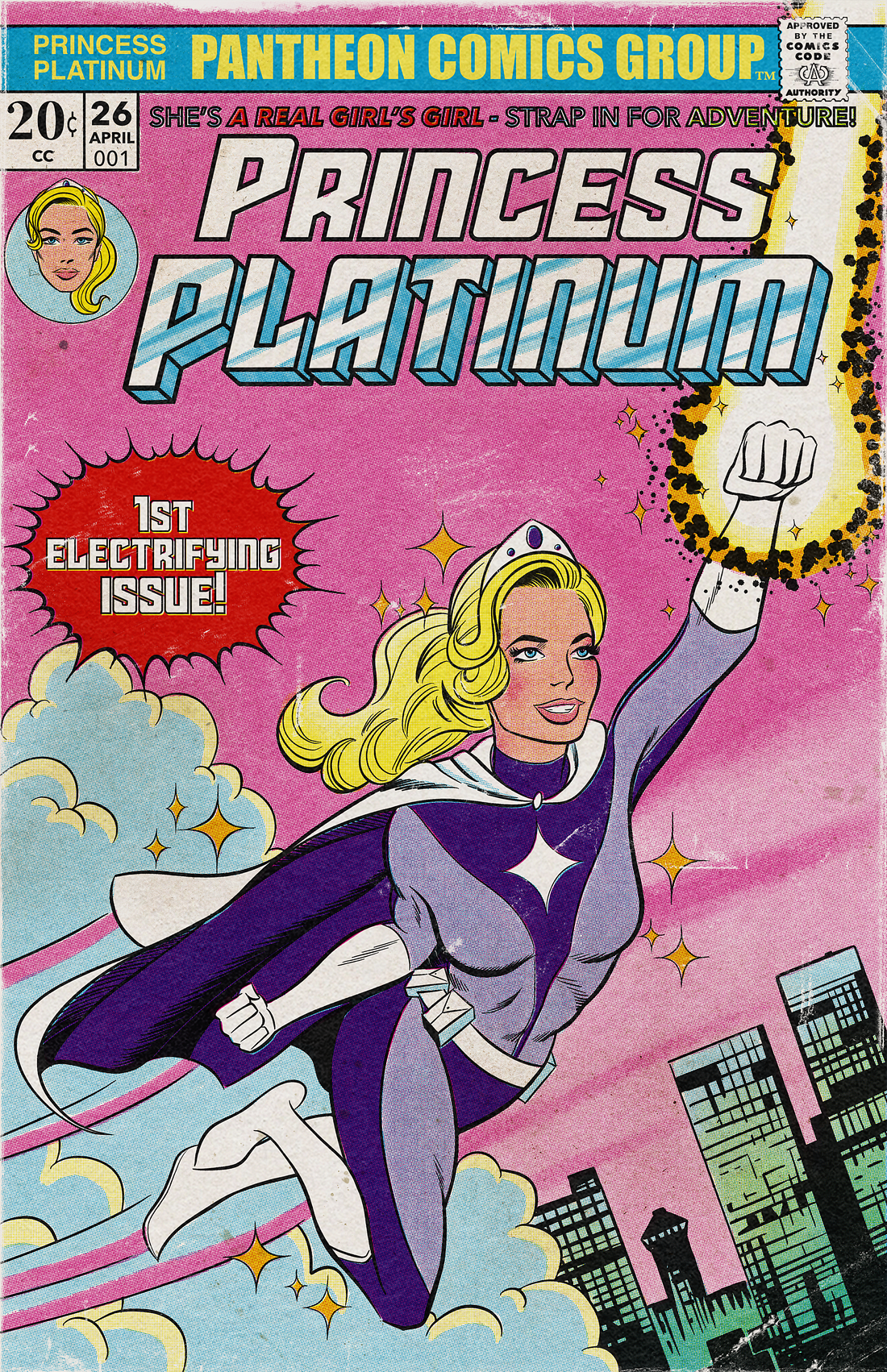
It’s a romcom about famous closeted film star Tess Gardner, known worldwide for portraying the (Marvel-equivalent) superhero Princess Platinum in the Vindicators franchise. Wanting to stretch her acting muscles and be taken more seriously, Tess takes a role in a play at a regional theater in LA. But when a scandal forces the director to drop out, he’s replaced at the last-minute by Rebecca Frisch, who just happens to be Tess’s secret love from over a decade ago.
The story is beautifully grounded in the world of theater and film, with all-too-real details and moments, and the Tess-Rebecca romance is easy to root for and genuinely compelling.
I was so excited to talk with Amy again, this time to unpack all the theater elements of this heartwarming novel. We spoke over Zoom. Our conversation has been condensed and edited for your enjoyment.
Now that I’ve read (and loved!) In Her Spotlight, I’m curious to hear where you were at in the process when we talked.
When I had talked to you, I had actually done a lot of research already. I talked to a lot of actors, a dramaturg, people who were tangentially involved in theater, or had written for theater, so I felt like I had everyone I needed.
And I was finding my way into the characters and the story. I had already started writing it, sort of like, “What are the logistics of theater…?” And that was when I was doing a lot of research and realizing how much more help I needed.
I was like, “I literally don’t know who is in this [rehearsal] room when someone is walking in on the first day. What is the vibe? Where is the tension coming from?” And I had in my head where I thought tension would come from, and it was not necessarily what everyone was saying when we talked about it.
I’m sure it’s the same for you when you write. You have an idea of how you think a story’s going to go. And then you start talking to people about it, and nobody is giving you what you’re wanting.
[We laugh.] Right! It’s like, “But no, isn’t it like this?” They’re like, “No.”
I was like, “Didn’t you hate that celebrity being there [in the rehearsal room] the entire time?” And every actor I talked to was like, “No. Man, if you want to do the work for no money and show up and work hard, we love you.” And I’m like, “Eugh, that’s so nice! That’s not what I wanted.”
So I hit a point where I know what I want to have happen, but I don’t know who’s in the room. I don’t know where people are standing. And the nice thing was, because I’d gotten so far in the process, I was literally set to write.
It’s like the end of Chapter 1, the beginning of Chapter 2, and I was like, “Lance. Who’s in this room? What is the vibe? What are people saying?” And you really took me through what it’s like to walk in on that first day. And I remember you said someone is almost literally going to say it’s like the first day of school.
Always. Yes.
So that’s literally in the book. Just the fact that everyone’s being like— That it’s almost when everyone is being the most theatrical, really using their stage voices and being like, “Look at me.” And I mean, I’m friends with these people. I know them.
You totally got it.
That was so useful because it was just like, “Okay, great, I know what I want to have happen, and now I know what the backbone is of what’s factually happening that underpins the emotion of what’s happening.”
Well, that’s amazing. You brought it to life so well. Our conversation had happened more than a year before when I read the book, so I didn’t remember exactly what we talked about. I just felt like, “She nailed it! This is resonating. This dynamic is real.”
At one point, I wanted to check something, and I couldn’t remember who had given me some information, so I pulled up a bunch of my research documents and was reading through them.
And it was like, “Wow. I just literally quoted a lot of people who have probably forgotten all about it.” If you’re an actor who talked to me for this book, you probably have been directly quoted a bit.
That’s magical.
I will also say—you weren’t the only one, but I feel like you were a part of it—which was… The character of Rebecca is the love interest. She’s the director of the play, and she’s also Tess’s first secret love. In my head, I was like, “She’s a director. Therefore, she’s probably bossy and a control freak and all these things.”
And everyone I talked to was just like, “When you work with a female director, they’re so open. They’re so cooperative.” And then I talked to a director, and she was like, “Oh, I just view actors as generative artists. I’m seeing what they can give me.”
I was like, “This is not the woman I thought I was going to write.” What I had in my brain was almost the stereotype, and it was just not true. I had to re-find my way into that character. I’m so glad. I love Rebecca so much.
Yes! You captured something so real and wonderful and human in the way Rebecca directs. And, as the story progresses, and we get to hear more of her thoughts about being a female director, and what it’s like to have to lead the room, the kind of vibe she has to bring to make people feel at ease and still lead at the same time—I thought that was all spot-on and so great.
Well, thank you. That was definitely the kind of storytelling I only was able to do because I talked to so many people. And I was willing to look at the outline I had and say, “Nope. That’s not where the story’s going now.”
I love that. In fact, we have a mutual friend, Rachel Dart, who was one of the directors you talked to. And as I was reading the way you depicted Rebecca, I was thinking, “Oh, I bet Rachel gave a lot of good thoughts on what it is to be a female director of theater.”
This book really taught me that when you start looking into things, and they don’t align with what you think, you have to be so ready to pivot. I think all writers want to think that we’re able to do that, but when it’s really in front of you, I felt like I learned a lot about ego.
Had you written many scenes with Bossy Rebecca?
No, I’d just outlined it. I thought: Tess has this kind of life, and Rebecca’s really a control freak—how they can ever find their way back to each other?
What I got to instead was two people with, in different ways, public personas, who are not necessarily good with handling what’s underneath. I think in Rebecca’s case, she’s assuming that if you know her, you know what’s underneath, and she doesn’t need to tell you.
And I think it ended up being more interesting and more rewarding to write anyway. Though harder because any time you’re like, “I wrote two main characters who don’t want to say what they feel, and sometimes they don’t want to feel what they feel”—a lot of revising went into the emotional arcs of those two.
That tension worked so well. Both of these characters so used to putting on a certain kind of face for the world, and then seeing each other for the first time in years, and they’re both just putting on their faces! And it’s like, “Ohmigod, how are they ever gonna break through this?”
Could you two just talk? Have a conversation?

And then with Tess’s public persona, the added thing of being a celebrity, so any kind of interaction could be filmed at any moment and lead to people saying, “She’s a bitch, she’s terrible.” I feel like you really got into that headspace so well. I’ve never been a celebrity myself, but it felt very real.
[We laugh.] Same. Same here. The nice thing is, if you’re just a person in society who’s interested in the idea of fame and how that kind of works—like not the fun part, but what does that do to someone’s life? If you’re paying attention to celebrity in general, if you read pieces about it, and you’re already a nerd about this stuff, I already had some thoughts going in. So then it was just fun to lean into that.
Do you ever interact with stars as part of your day job in film marketing?
Not really. The most that might happen is we’re all invited to the same premiere. And maybe they’ll be over there, and I’ll be over here, and I’ll be like, “Wow. It’s a famous person. They’re right there.”
I have a friend who used to be a personal assistant to an A-list actor. So she had a lot of, “Here’s how this works, here’s how that works.”
And I was like, “Well, this person can’t even go outside!” And everyone’s like, “No, people can go outside. People can go to dinner. People make reservations. It’s not…” Especially in LA, it’s just so regular. It’s just the city’s code of like, “We are gonna elbow each other that they’re there, but we’re not gonna go bother them or scream or something.”
I want to talk about the play-within-the-play, Hometown, which also felt very credible as a piece of theater that would exist and be at a regional theater.
I don’t know if you know Meghan Deans—
I do know Meghan Deans! What a tiny world. [Note: Meghan is an awesome playwright and the Executive Marketing Editor at Ecco.]
She was like, “Look, I think it’s a perfect title. It feels like a play. I do think if it was at the Public, it would be two words. It would be: Home Town.”
[We laugh.] Or a slash! Home/Town.
But she’s like, “That’s not where you’re developing it, so I think it’s okay.” But ever since then, I’m like, “Ohhh, I wish it was two words.” So, anyway, that’s a little sidenote on Hometown.
I love that. I think it works as is, but completely. Home Town. Did you have to think about a lot of possibilities before settling on Hometown as the play? How did you decide on the cast size? Was that a process or did it just flow out naturally?
It was a bit of a process. Now that I do have friends in theater—not just actors, but people writing and creating shows—I have learned that cast size is sometimes very much budget-dependent.
Yup. You see a lot of one-person shows these days.
One of my best friends is a musical theater composer and lyricist, and the show that’s gotten the most traction is a two-hander, and you know: that was written for a reason.
So I feel like I actually—though it wasn’t budgetary—I can only write about so many people in a book, so I thought, “Oh, what if the whole cast was this size?” Because I just kept thinking that with a big cast, you’ve got people you don’t ever meet, and this was much simpler.
And I mean, my editor was already like, “Amy, there are so many people in this book.” And I’m like, “Well, I simply don’t know how there could be fewer.” It was like, “Do we have to mention the dramaturg?” I was like, “Yes. The theater people in the world will kill me if I don’t. It’s a very important role.” And she’s like, “Does the stage manager have to be a character?” I was like, “YES.” And then I think at one point was going to list an assistant stage manager, and she’s like, “You have to stop.” And I was like, “All right. I’ll give you that.”
[Laughing.] Fair enough. But yeah, stage manager… Essential.
Absolutely. And then of course Kevin ended up being such an important role in the book anyway, so thank god he’s there. It was very much the [cast] size to me that made sense with how much storytelling was in my head.
On top of that, I just kept thinking about what are the plays that people do? It is a lot of stories where like… This is one of my pet peeves—there’s always plays and movies and books where someone comes back to their small town, and it’s like, “Isn’t it better than that dumb city you live in?” And I’m like, “Nooo! No it’s not.” Why is this always the conversation? It’s not! Maybe it’s cozy. Maybe there’s a diner. Maybe the cost of living is certainly better.

But also, by the way, for who lives there, it is better. But if a person left for a reason, that reason is likely still true. And I liked the idea, even if we’re not really seeing a lot of what happens in this play, of having it be about someone who’s left their small town, and the play then happens where they’ve moved to, instead of being mired in the past.
I wanted it to be the idea of someone working through a past trauma and the people in her immediate family being more a part of the community responsible for the trauma rather than being on her side and listening. And this being the first time she’s willing to say it anyway. Which— I just feel like that is the kind of meaty role an actress would take a play for, and that would be in development at a theater like this.
And also, of course, I liked the symbolism in that. I liked that, for Tess, there was so much from her youth and her young adulthood that she was never going to talk about. Then this play starts, and it’s time.
Yeah, it works so well. And in that small cast, the different actors and personalities that surround Tess are also very spot-on. You’ve got Kathleen, who’s the NYC theater actor in her 50’s…
My editor says, “We can agree Kathleen is the best character in the book, right?” I was like, “Oh yeah. For sure.”
Love Kathleen. And definitely recognize that person. And Michael! The very pompous New York stage actor who really gives Tess a hard time.
Though I gotta say, I love Michael so much, and I enjoyed writing him so much.
Yes, he’s great. And, as with all good writing, the layers unpeel as the book progresses, and you understand the human inside Michael and why he has his guard up to some extent.
Also sometimes I just think I like… There are some people who are just kind of arrogant, and I kind of love them.
And then Henry got to embody every self-effacing thing every actor told me. Which I felt bad about. I mean, Henry is the more annoying actor. He’s just always like, “Tell me I’m good, tell me what to do!” Someone I talked to said that when you direct men as a woman, there’s usually one man in the cast who just wants you to be his mom throughout the process. And I was like: it’s Henry.
That’s so funny. Such a great seed to build a character from.
I used to do improv, and it’s like, “What’s the game of this scene?” Or “What’s this character’s game?” So Henry’s game is he’s just like, “You’re my mom,” and Rebecca’s like, “I’m absolutely not.”
And one of my actor friends just kept telling me the funniest stuff, like, “Ughh, it’s like they’re torturing us. Just making us do all this stuff for them!” Everything he said was making me laugh so hard because I’m like, yeah, that’s just the job.
But I also understand it is weird—you’re in a room of adults, and some of the adults just keep being like, “Say it again. Say it again. Be weirder. Move the body like this.” It’s an exercise in vulnerability that doesn’t go back and forth. It can be very one-sided.
It really is. You’re making me think of some of my most frustrated moments as an actor. And I loved doing theater, it was so great. But when it’s like, “Okay, we’re running it again.” And it’s like, “Why??? WE NEED A BREAK. We’re people!”
And Ashlee was the final piece, so initially I knew her the least. I’m not even sure she had a name at first. I really liked Tess being insecure because Ashlee has more stage experience, even though she’s much younger than Tess. And despite how much Tess is closeted and cutting off a connection with what she really wants, Ashlee is still more of a disaster in her love life.
Sometimes when you’re struggling, and you look around, and someone else is struggling that you like, and you’re like, “Oh, we’re all in this together.” It was nice for Tess to have that touchstone.
The last thing I wanted to ask about involves the Pee-Wee documentary, Pee-Wee as Himself, from last year, which I know you loved as much as I did. And I was thinking about that in regards to Tess’s story, the way Paul Reubens had to cut off a part of himself, his sexuality, in order to succeed. I was wondering if you saw that documentary during the writing or if you were already pretty much done by then.
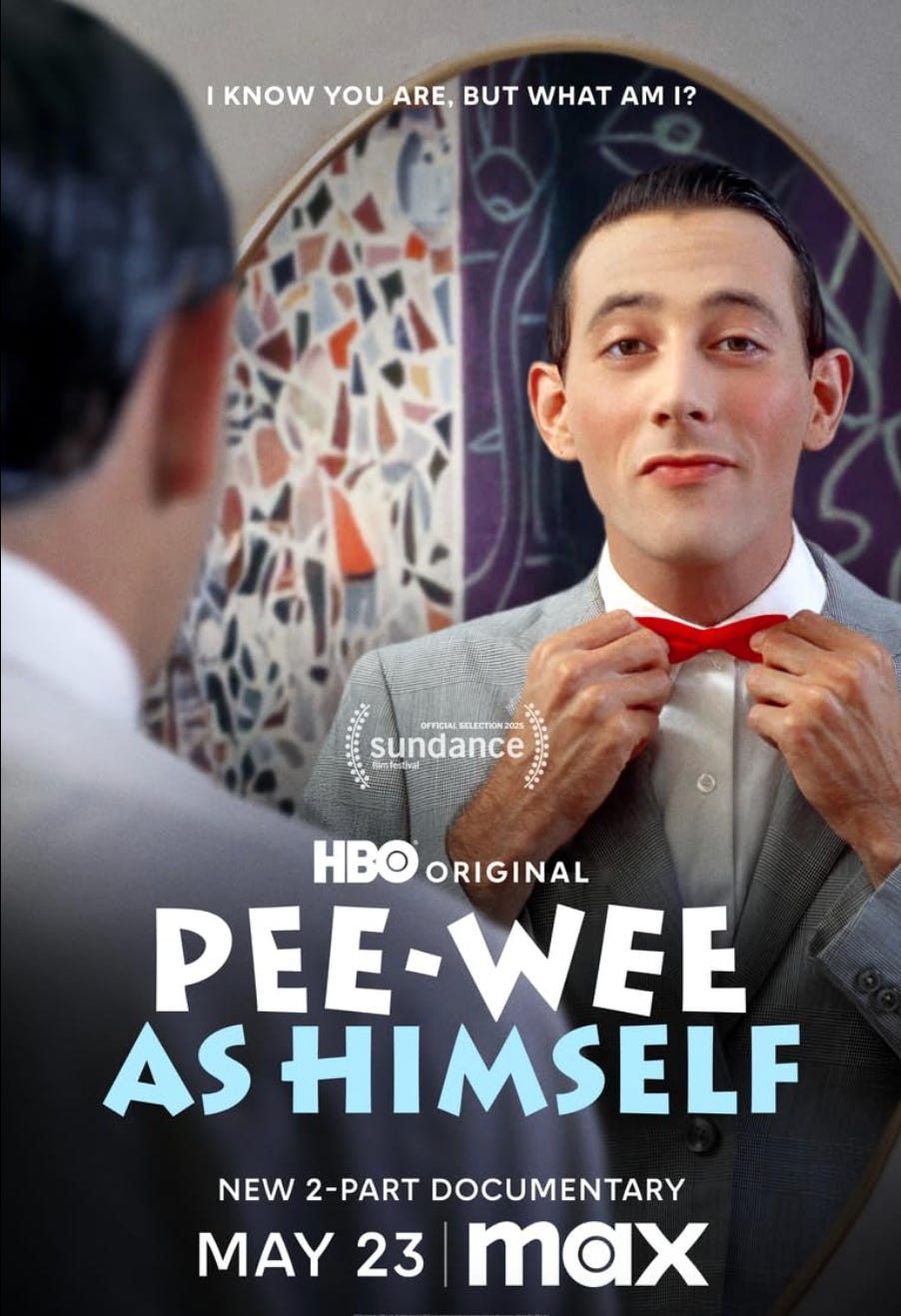
I saw it after I’d written the book, but it really struck me. My first queer book was The Summer of Jordi Perez, and one of the most important parts of writing that book for me was that it wasn’t about coming out. And it wasn’t about being closeted. It was about being joyful and secure in your queer identity.
So I really was like, I don’t want to dwell on the sadness and isolation of the closet. And I was concerned that writing too much about coming out was writing about the feelings of straight people, whether or not they accept you, versus you, and centering the queer person in the narrative.
So I honestly never thought I would write a book that was this much about being in the closet and the shame of it and the unwillingness to look at your own sexuality. I just think, for one thing, every book you write, you get better. And I feel like I developed the skills of, “Hey, you can write about things with enough nuance that you’re still driving the narrative, and it’s still about what you want it to be about.”
I really feel good where it landed, but yeah, I 100% while watching the Pee-Wee documentary was just like, “Oh, whatever year it is in Tess’s world, is she watching this and relating?”
Especially because, like Tess, Paul Reubens had his art school boyfriend who he loved, and then they broke up, and he was like, “I’m not doing this anymore.”
He was like, “If I want this [professional] life, I cannot have this [romantic] life. So I’m actively making this sacrifice.” And I mean, it’s heartbreaking, but it was also strategic and he had a plan. The fascinating thing about his story too, was that he was out within his family and his friends circle, and he still was like, “The public can’t know.” And also, when he was famous, he was correct.
Yeah.
That’s the heartbreaking part.
Brutal. As queer-adjacent as his character was, he himself could never be fully queer.
It is very fascinating to watch Pee-Wee’s show now because it’s just… I mean, that Christmas special is just wall-to-wall gay references and gay culture. I’m like, “Oh, I’m just so glad that no one labeled this as queer for me.” I saw it, and it got in there. It’s really special.
Thanks to Amy for this superfun conversation! Really can’t recommend In Her Spotlight enough. It’s out this week (pun maybe intended?), and you should buy it! You should also read the other three Out in Hollywood novels. I haven’t yet, but I’m working my way backwards through the series! Which you can do because each novel stands alone even as some of the characters overlap in fun ways!
And if you’re in NYC, Minneapolis, or St. Louis, go to one of Amy’s events this week!
Thank you as always for being here. It’s almost March! Which means it’s almost spring! That is great news! And so are you.
See ya soon.
not THE unproducible smackdown winning playwright meghan deans
it's fun when something is Dynamic Driven (& character driven by extension) & so dynamics & characters can be discussed & described without even having to worry much about giving away plot. & then a central plot premise of something itself as dynamic as Theatre / Rehearsal alone makes a work sound engaging. like how much i learned about what doing improv can involve & feel like from crying laughing—which, the comparison of characters' motivations & personalities as what improv game they're trying to play was great, & those insights on comparisons / similarities / overlaps / etc between ways of storytelling & performing & playing as a topic that extra tends to be discussed around here is a treat every time